

Chemical Curiosities Gets in the Christmas Spirit Making Chemis-Trees!


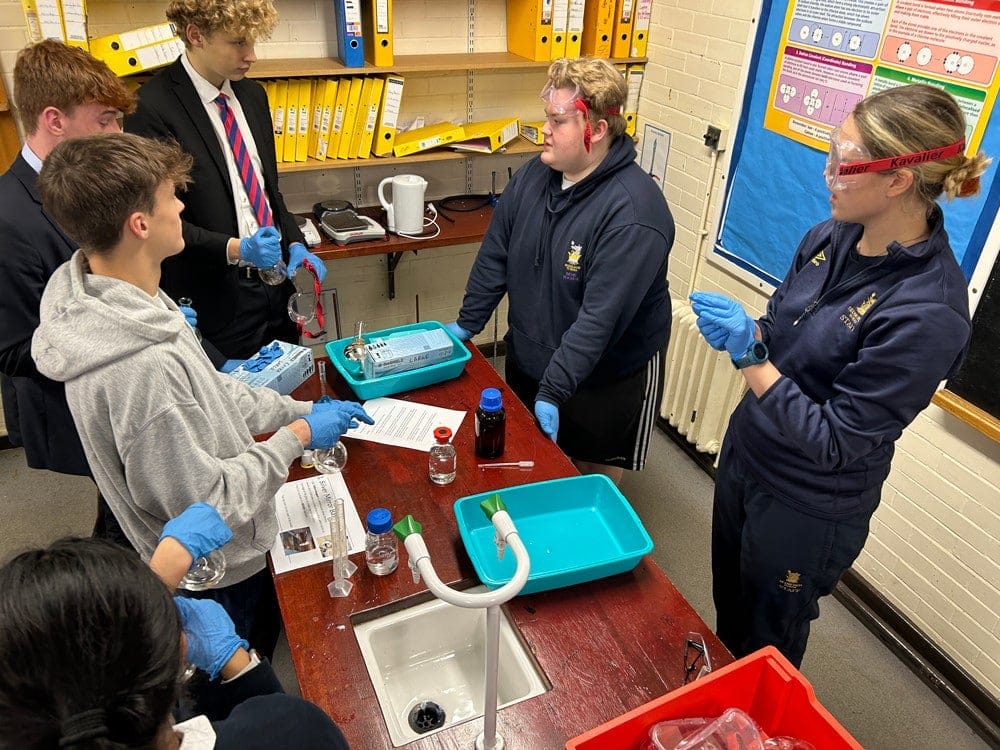
For the final session of the year, Chemical Curiosities, our newest academic society, extended a warm invitation to pupils to join us in applying their chemistry expertise to craft decorations that would embellish our Chemis-Trees.
Guiding this creative endeavour was Ms. van Diepen, alongside the society’s founders—Jack, Mason, and Benedict—each leading a different decoration-making hub.
- Silver mirror baubles – Based on the method that was historically used to make mirrors we reacted ammoniacal silver nitrate with an aldehyde (redox reaction) to coat the inside of our ‘baubles’ with silver!
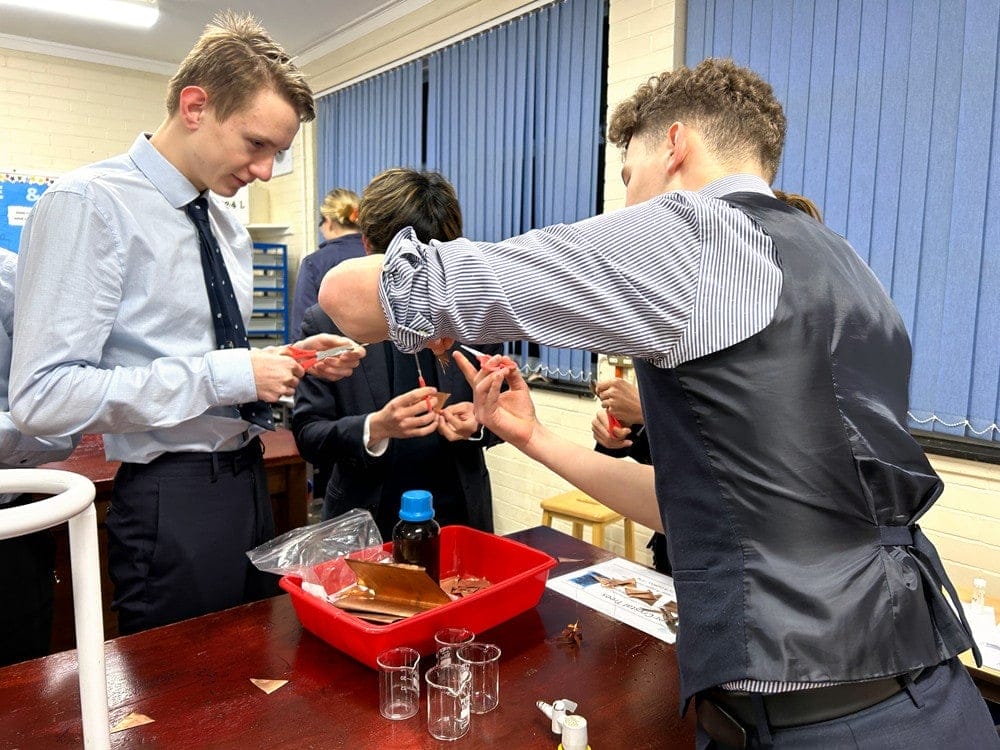
- Silver crystal trees – Using tin snips we cut Christmas tree shapes out of copper sheeting. We then immersed our copper trees in silver nitrate solution. The silver replaces the more reactive copper (a displacement reaction) leaving our trees coated in pure silver!
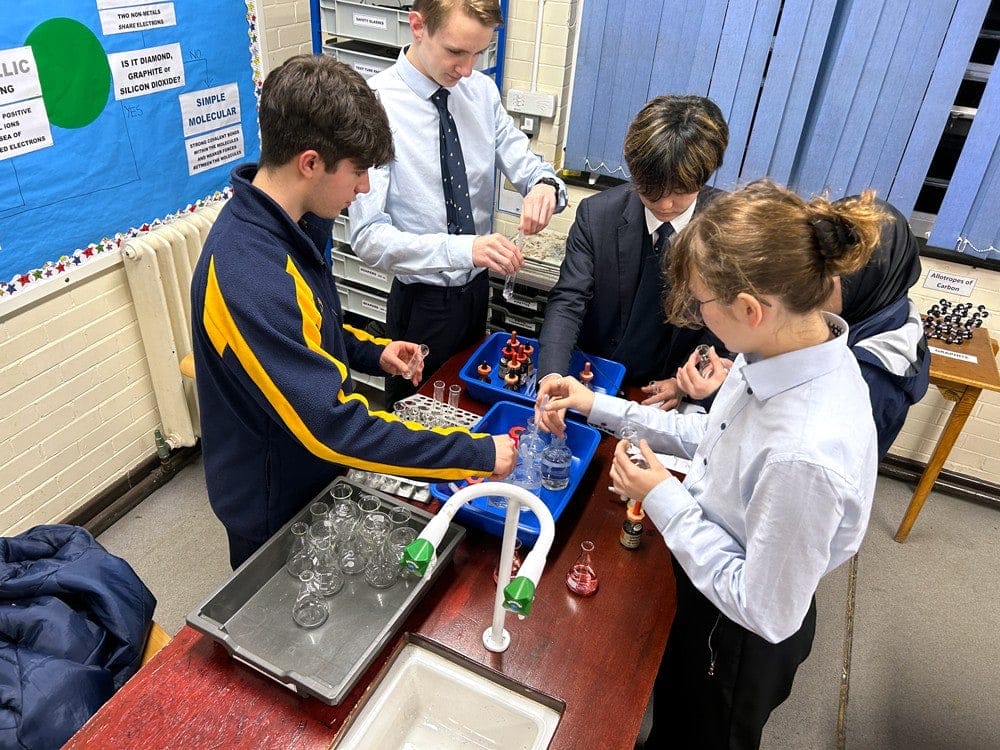
- Indicator baubles – Using acids and bases we changed the pH of our Indicator Solutions to create ‘baubles’ ranging in colour from pink through to green, blue and purple!
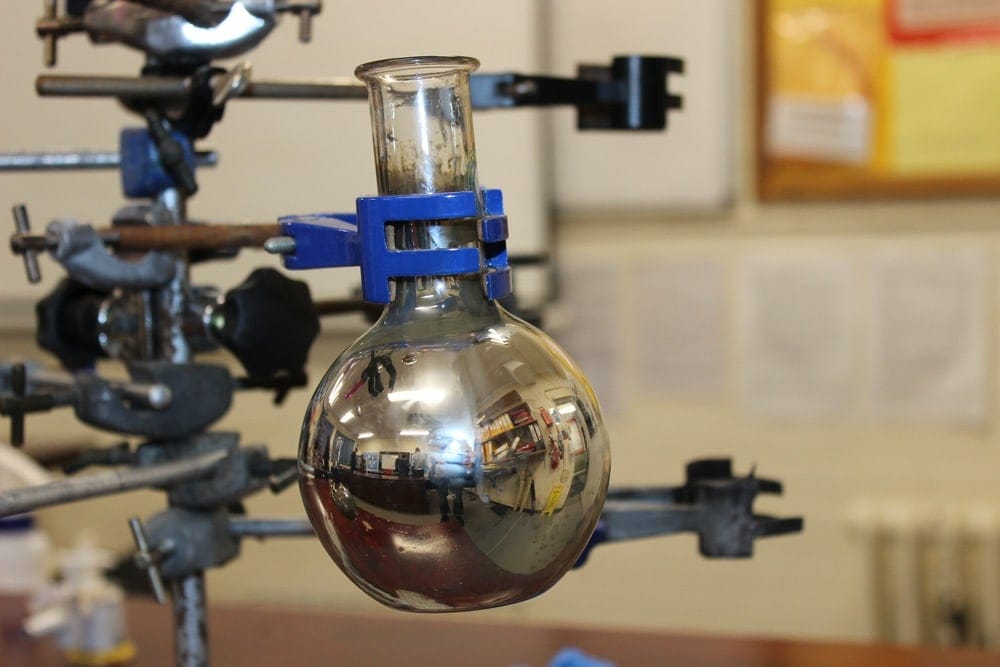
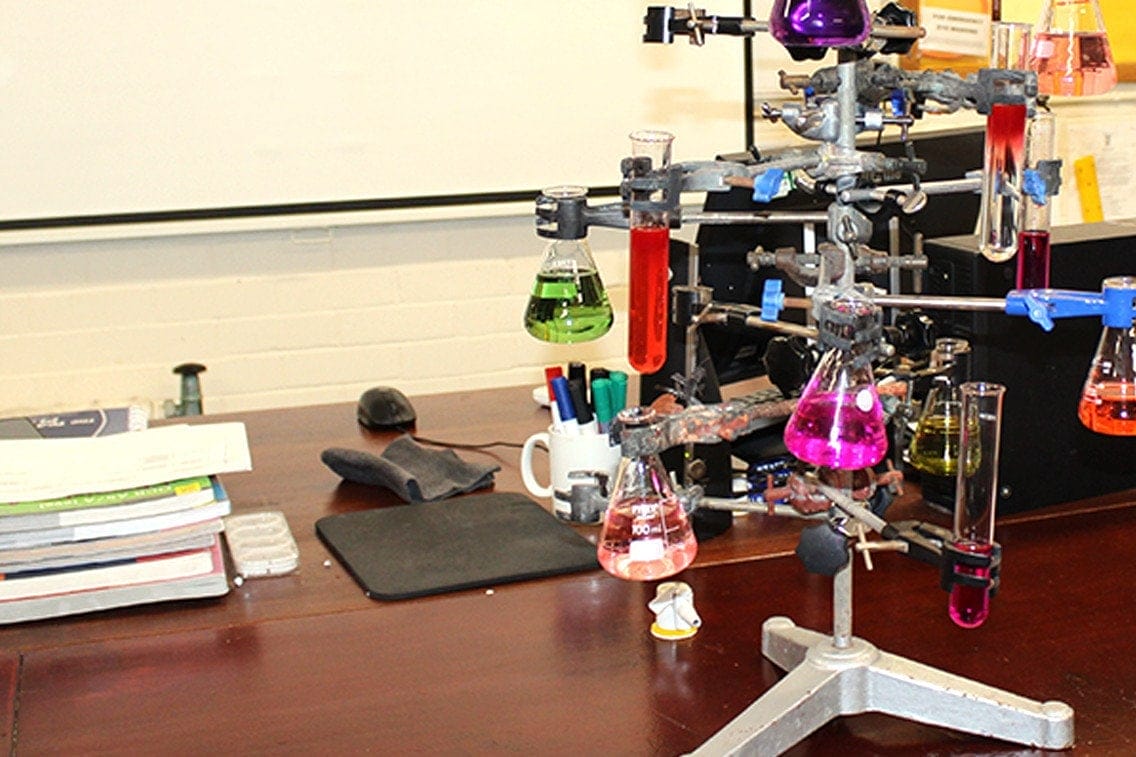
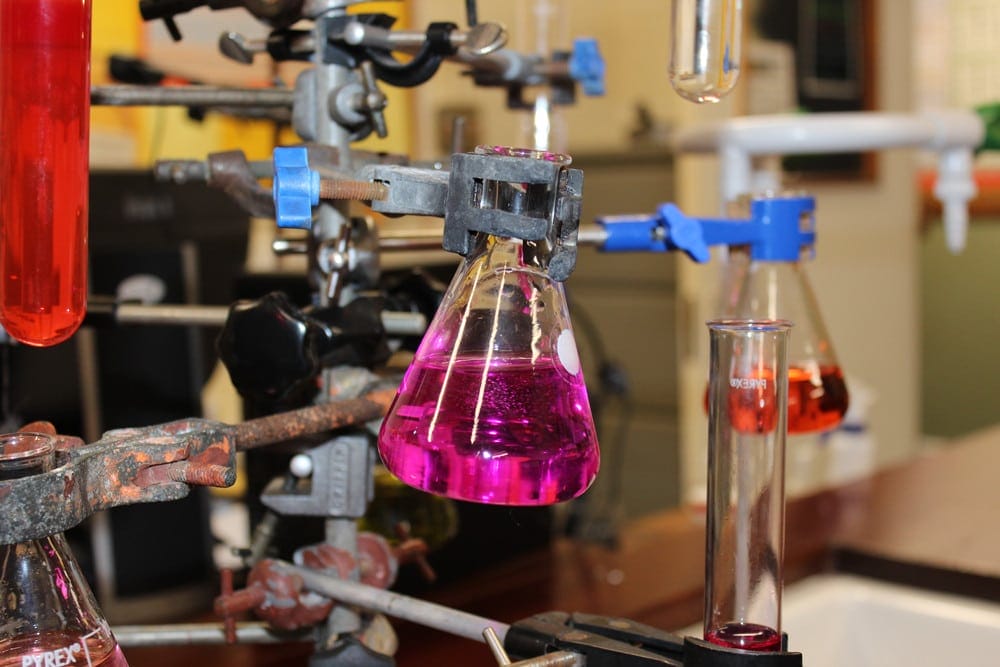
The formulations we used in our lab can’t be repeated at home, so Ms van Diepen has shared instructions for making your own Salt Crystal Snowflake; a decoration that everyone can make safely at home!
Make Your own Salt Crystal Snowflake Decorations
- Make a snowflake shape out of pipe-cleaners and attach it to a piece of string to hang the snowflake decoration from later. Your snowflake design should fit into a clean glass jar.
- Boil 1 cup of water in a pan.
- Add salt to the water and stir until it has dissolved. Keep adding and stirring until no more salt will dissolve (this will be probably around a cup of salt).
- At this point you can add a food colouring of your choice.
- Pour the hot solution into the glass jar then suspend your snowflake in the solution with the string hanging out of the jar.
- Leave the experiment for up to a week and salt crystals should form along your snowflake design.