


History and Heritage

Sedbergh School was founded in 1525 by Roger Lupton, provost of Eton College and Chaplain to Kings Henry VII and Henry VIII. Folklore tells that as there was no local school for Lupton to attend he walked the 270 miles from Sedbergh to London to gain an education.

The earliest school building is likely to have been on the site of the current school library. The library was built in 1716 and had a simple wooden upper storey inside. This drafty building was heated with one fireplace which the sole master sat beside. The pupils sat in rows with the oldest boys closest to the teacher and the fire, whilst the youngest boys sat at the farthest end of the room. The library is a much more welcoming building now which includes scholars’ booths and private study areas.

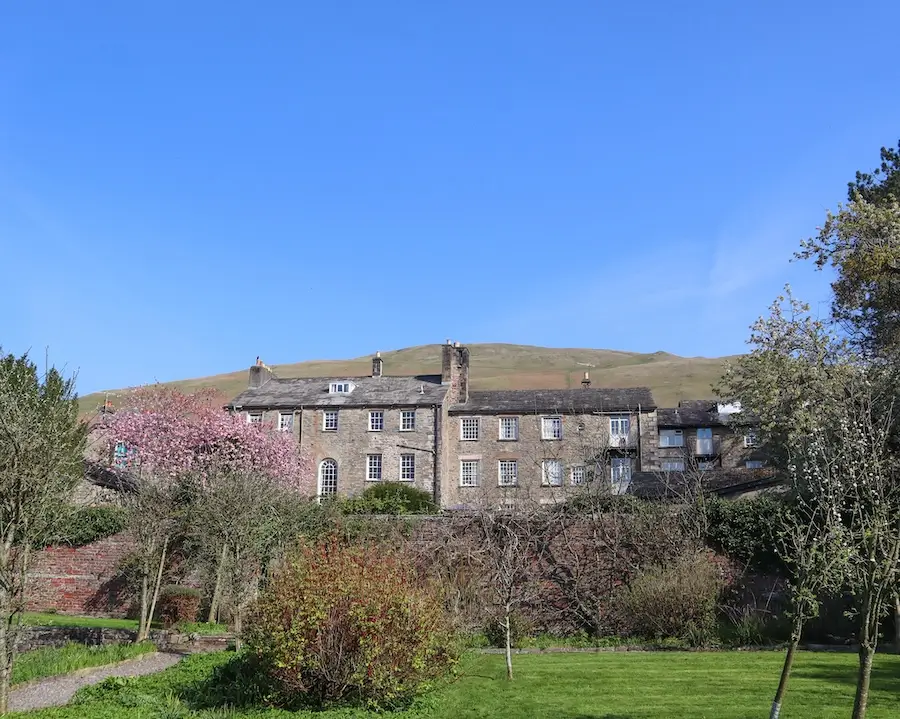
The oldest boarding house, Evans House, was built around 1750 as a private house. The headmaster Christopher Hull lived there and took in private boarders. When he died the school bought the house and continued the tradition of the headmaster living in Evans house and taking in boarders. Local tales suggest that a secret tunnel links Evans House to the church next door and that Bonnie Prince Charlie used this to evade capture during his journey through Sedbergh.

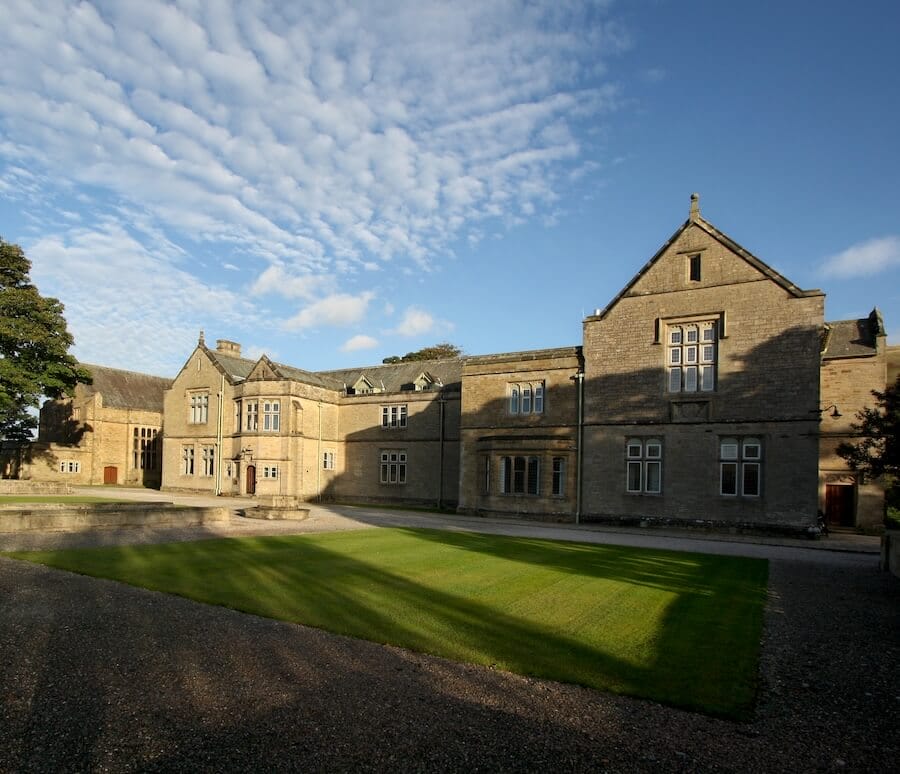
In around 1870 the school numbers dropped to only 9 pupils and headmaster Heppenstall was brought in to transform the school. He believed that the school needed to increase in size dramatically to secure its survival. At that time the school estate consisted only of the library building and Evans House. Heppenstall commissioned a firm of well-respected architects, Paley and Austin, to design the Victorian Main School buildings and three purpose built boarding houses, School House, Hart and Sedgwick. Heppenstall formed Sedbergh in the model that still exists today. He established the architectural style of the school, introduced rugby in 1879 and started the Sedberghian magazine in the same year. During this period of change Lupton House was built in the town. The three separate town houses were rented by school initially and then converted to form one character filled building.

Worship for Sedbergh pupils originally took place in St Andrews Church, however the expansion of the school during the 19th century meant that the school could no longer be accommodated at town religious services. The new chapel was completed in 1897 and features yellow sandstone on the exterior and red sandstone on the interior. The building is fitted with many stained-glass windows that fill the space with shafts of coloured light when the sun shines.

”The importance of Sedbergh’s history is profound. Every boarding house has its own heritage and stories passed down from one generation of boys to the next. These traditions foster a sense of belonging that is reflected from our oldest alumni to our youngest pupils.”

Katy de la Riviera, School Archivist

”The importance of Sedbergh’s history is profound. Every boarding house has its own heritage and stories passed down from one generation of boys to the next. These traditions foster a sense of belonging that is reflected from our oldest alumni to our youngest pupils.”

Katy de la Riviera, School Archivist

The twentieth century

During the first world war the Masters’ hostel was converted to become Powell House, the sixth house to be formed. Sadly 259 pupils lost their lives in the war. These boys are commemorated on the Memorial Cloisters that were completed in 1922.The monument has five arches to represent the five houses who had suffered casualties. The Cloisters are purposefully of simple design as it was felt that the building should not have needless decoration.

Throughout the twentieth century the school continued to expand. Winder House was established soon after the first world war. Later, the sanatorium was converted to accommodate junior boys under the new title, Cressbrook House. As the junior department swelled in numbers a junior school in its own right was established a short drive away. Girls arrived at Sedbergh in 2001 filling first Lupton House and later Robertson House, the former sanatorium. Following the merger with Casterton School in 2013 a third girls house was opened, Carus house, which is named after the founder of Casterton School.

The school continues to grow and develop with the new Hirst Centre providing excellent sporting provision since 2018 and new, flood-lit, Tiger Turf hockey pitches built in 2023.


Alumni

Sedbergh alumni have held the highest positions in law, diplomacy, sport and business. Amongst the notable alumni are Adam Sedgwick, known as the founder of modern geology and mathematician James Inman, a pupil in the 1790’s. Inman was Professor of Mathematics at the Naval School, Portsmouth and wrote several technical treatises including Navigation and Nautical Astronomy which became the standard text for nautical navigation for nearly 200 years.

More recently Thomas Bingham, Baron Bingham of Cornhill was educated at Sedbergh. He was a British Judge who served as Master of the Rolls, Lord Chief Justice and Senior Law Lord. He was recognised as the greatest judge and lawyer of his generation and was a generous supporter of the school. Multi award winning screen writer Simon Beaufoy gained his first theatrical experience at Sedbergh School performing in The Revengers Tragedy.

His first Academy Award was given for his screenplay The Full Monty. More recently his screenplay adaptation of Slumdog Millionaire saw him win a further Academy Award as well as a Golden Globe and a Bafta. Sedbergh alumni have long excelled in sport with Rugby being perhaps the team sport most commonly associated with the school. Will Carling O.B.E. played for Rosslyn Park and Harlequins alongside a long career with England which saw him gain 72 caps between 1988 and 1996 and captain the squad 59 times. In women’s rugby Abbie Scott currently plays for Harlequin Ladies and England. During the 2018 Quilter Internationals she gained her first captaincy leading the team to a 57-5 victory against USA.

Recent alumni are supported by the vibrant Old Sedberghian Club, which was first recorded in school documents in 1890. The club facilitates internships and career development opportunities within the alumni network as well as hosting sporting and social events.

Archive Collection

The Archive is home to a vast collection of historic material. The oldest items in the collection date from 1527 and the newest items are being created by staff and pupils now to record the historic achievements of current pupils.

The archive holds much material that captures the history of the school, its’ pupils and the manorial land across Yorkshire that Sedbergh School managed over several centuries.

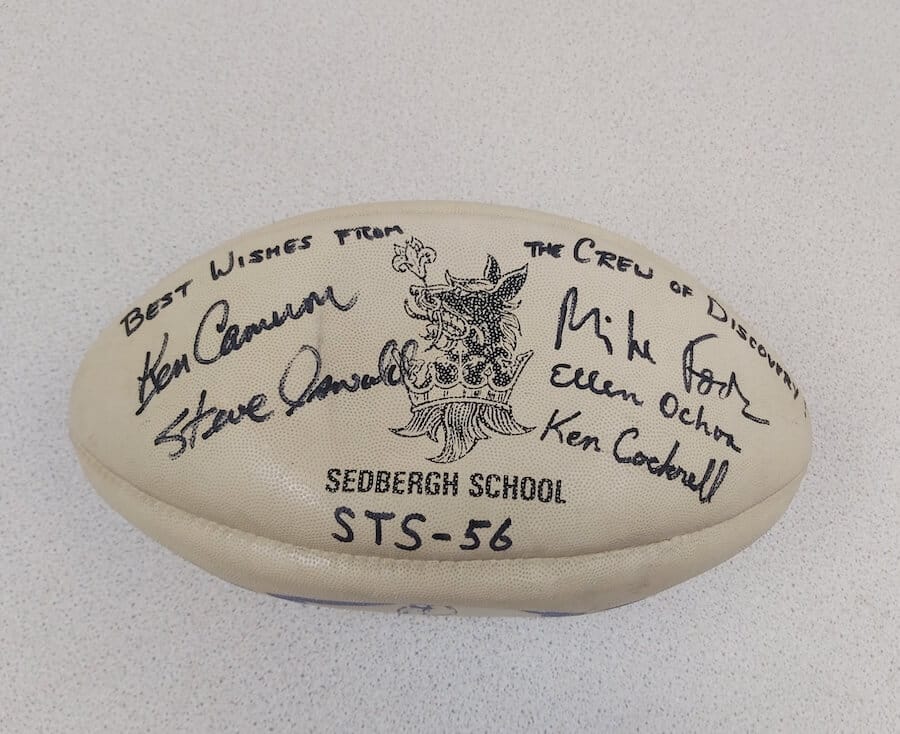
The diverse collection also includes a Sedbergh School rugby ball that has orbited the earth on the NASA discovery shuttle, a WW1 Infantry Sword and a bound collection of speeches given by Franklin D. Roosevelt and inscribed by hand by President Roosevelt to Winston Churchill.

The archive can be visited by appointment. For more information please contact the archivist Katy de la Rivière at kdlr@sedberghschool.org or 01524 239410.

Recent alumni are supported by the vibrant Old Sedberghian Club, which was first recorded in school documents in 1890. The club facilitates internships and career development opportunities within the alumni network as well as hosting sporting and social events.

Origins of the Sedbergh Wolf

The Sedbergh Wolf has come to symbolise team-work, community, loyalty, competition, striving to achieve, passion and creativity. But how did this iconic image come to be associated with Sedbergh School?

Sedbergh School was founded by Roger Lupton who was Provost of Eton College, Canon of Windsor and chaplain to Kings Henry VII and Henry VIII. Lupton was advisor to the monarchs during the fraught separation from the Roman Catholic church.

Lupton was granted a coat of arms by King Henry VII which included three wolf heads. These refer to his surname Lupton which is derived from the Latin word lupus meaning wolf. In heraldry more widely the wolf represents the noble or courageous and is often used to symbolise perseverance.

Other elements of Lupton’s coat of arms include three lilies representing the virgin Mary, escallop shells symbolising the pilgrimage of Santiago de compostela, a popular religious pilgrimage during Lupton’s lifetime and the Tau cross to symbolise the support that Christ gives as well as referring to St Anthony’s Hospital of which Lupton was master.

School Songs

Sedbergh has a rich history in terms of traditional songs that represent the school.

For many Old Sedberghians the songs of Sedbergh School will evoke memories of Sedbergh traditions and ‘the hills that have stood around us’. The earliest school songs were written by Lupton Housemaster R. St. J. Ainslie in 1880’s with music by P. A. Thomas. During the 1880’s music blossomed at Sedbergh. The first school band was formed and regular concerts were performed in classroom 21 with contributions from masters and pupils. The first school song ‘Sedberghiam nactus es, hanc exorna’ written in 1884 was sung at the end of concerts and other formal school events. Other early songs included ‘Football Song’, ‘The Sledge Song’ and ‘The Long Run’ which was written in around 1890. ‘Sedberghiam nactus es’ was replaced by ‘Floruit Floreat’ as the school song in 1893.

‘Winder’ was written in 1911 by Headmaster F. B. Malim with music composed by A. W. Ogilvy who was director of music at the time. ‘Winder’ was quickly adopted as the school song although both of the previous school songs continued to be sung for several decades at school events

Winder

Click here to download the sheet music to ‘Winder’

Oh, Eton hath her river,
And Clifton hath her Down,
And Winchester her cloisters
And immemorial town;
But ours the mountain fastness,
The deep romantic ghylls,
Where Clough and Dee and Rawthey
Come singing from the hills.
For it isn’t our ancient lineage –
There are others as old as we;
And it isn’t our pious founders,
Though we honour their memory;
‘Tis the hills that have stood around us,
Unchanged since our days began;
It is Cautley, Calf and Winder,
That make the Sedbergh man.
Not ours the crowded highway,
The dust, the heat, the glare;
We see a vaster prospect,
We breathe a larger air;
We watch the heather redden,
We hear the curlew cry,
About us is the moorland,
Above the windswept sky.
For it isn’t…

Oh! Stout and strong his sinew,
And clear and cool his brain,
Who knows the joy of facing
The mountain wind and rain,
Beneath him in the valley
He hears the motor hoot,
But none may stand on Winder
Save him who goes on foot.
For it isn’t…
So when in days hereafter
In tamer lands you dwell
Or in some fevered city
Far off from beck and fell,
As boyhood’s days grow dimmer,
The memory will not die
Of Winder’s clear-cut outline
Against an evening sky.
For it isn’t…

F.B. Malim
A.W. Ogilvy

The Long Run

Click here to download the sheet music to the ‘Long Run’

At Olympia, far away,
In the boyhood of the world,
There were glorious games, they say –
Discs were thrown, and spears were hurled;
Came the athletes, strong and stately,
Leapt and ran, and wrestled greatly,
While a nation stood and wondered,
And a shout to heav’n was thundered:
Strain and struggle, might and main;
Scorn defeat and laugh at pain,
Never shall you strive in vain
In the Long Run!

Sedbergh in the hardy north,
She her runners, too, can show;
Sends her fleet Athenians forth;
Trains her Spartans in the snow!
Herald march the blast is sounding –
Rugged hills the course surrounding –
Don your jerseys, make you ready,
Up and off, lads, swift and steady!
Strain and struggle, etc.
Not so fiercely as at first,
Toiling on to Cautley Bridge;
Down the hill-side with a burst,
On to Baugh Fell, up the ridge;
Plunging through the tangled heather,
Garsdale finds ye less together;
Panting breast and straining sinew –
Set your teeth, lads, and show what’s in you!
Strain and struggle, etc.
At Olympia, far away,
When the victor wore the crown,
Breathing marble, burning lay,
Made immortal his renown.
What tho’ Fate hath given to Winder
No Praxiteles and Pindar,
Yet her sons, who bravely bear them,
Sedbergh in her heart shall wear them!
Strain and struggle, etc.

Words: R St J Ainslie
Music: P A Thomas

VISIT PROSPECTUS APPLY
x

Arrange a Visit

x