


Freddie Spencer-Chapman: A Legacy of Resilience and Exploration


by Dr Philip Hoskin.
On Friday 17th January, it was an honour for Sedbergh School to host the son, Christopher, and grandchildren, Hazel and Stephen, of one of Sedbergh’s finest, Frederick Spencer-Chapman. Freddie, was an Old Sedberghian (L, 1921-26), a Cambridge graduate, an explorer, an educator and a war hero.
Stephen introduced his talk as primarily being about resilience – what it means, how it can be cultivated, and why it matters.
By way of background, Stephen, had spent a decade as an officer in the Parachute Regiment where he served in 2 PARA with 16 Brigade as part of the Army’s rapid response formation and 1 PARA under the command of the Director Special Forces in the Special Forces Support Group.
Stephen then introduced the theme of resilience through the story of his remarkable grandfather, Freddie Spencer-Chapman. A man that not only survived but positively thrived through challenges that most of us can scarcely imagine: three and a half years behind enemy lines in the Malaysian jungle. The recurring message is that resilience is not a trait that you are born with – it is a mindset that you develop. It is the capacity to recover, adapt, and emerge stronger from challenges.
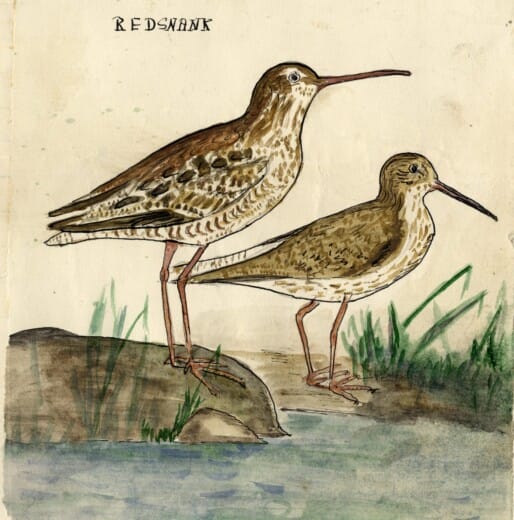
After Stephen’s introduction, Christopher – himself a keen ornithologist like Freddie – talked about his father’s childhood, his time spent at Sedbergh and university and how the foundations of Freddie’s resilient mindset were established.
Freddie came to Sedbergh School in 1921 and resided in Lupton House. As a result of his strong character he was made Head of House in his final year at Sedbergh.
A school friend once described Freddie as:
‘the most unwashed and independent boy in the school…his pockets crammed with birds’ nests, caterpillars and any natural specimens he happened to fancy…’
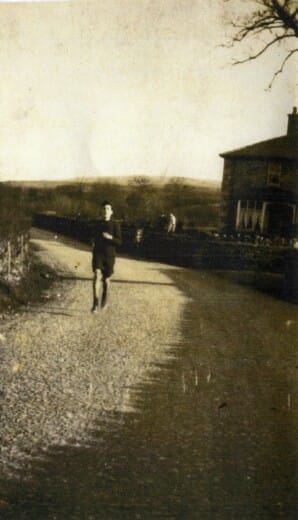
Whilst at Sedbergh, Freddie participated in a variety of individual sports including swimming, boxing and running. It soon became clear that Freddie’s true passion lay in exploring and discovering nature. He was an active member of the Sedgwick Society and won the Nature Study Prize for his essays on birds. He spent many hours exploring the fells and moors around Sedbergh.
Freddie was anything but conventional and a classmate at Sedbergh once recalled the extent of his rule breaking:
‘Poaching, breaking bounds going into town or slipping out at night, missing call-over, going to cock-fights, keeping ferrets.’
On one occasion while out poaching, Freddie and a friend were shot in the back by an enraged gamekeeper. Using a penknife, they removed the pellets from each other’s backs.
Freddie really valued his time at Sedbergh as preparation for his future endeavours:
‘Experiences like this, more than anything else I learned at school, were to save my life, time and time again in the years that followed.
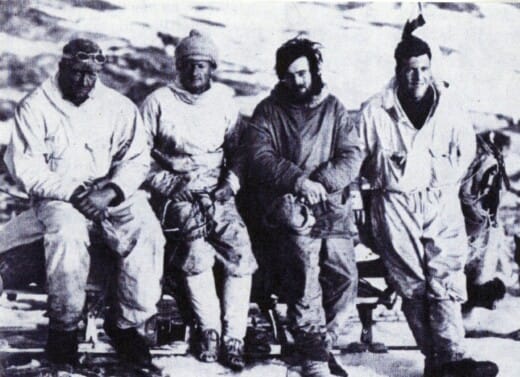
Stephen then outlined an important pre-war chapter that Freddie spent navigating the vast uninhabited landscapes of the Arctic Circle. During this period, Freddie experienced losing friends and companions, but learned how to find peace through nature. Additionally, he found levels of resistance that were unfathomable before. In 1936, extreme ‘marathon running’ and climbing followed whilst Freddie was part of a diplomatic mission to Tibet. It was through these trips that Freddie honed his survival skills. And, conditioned by these experiences, Freddie adopted a philosophical motto from Hamlet: ‘there is nothing either good or bad, but thinking makes it so.’
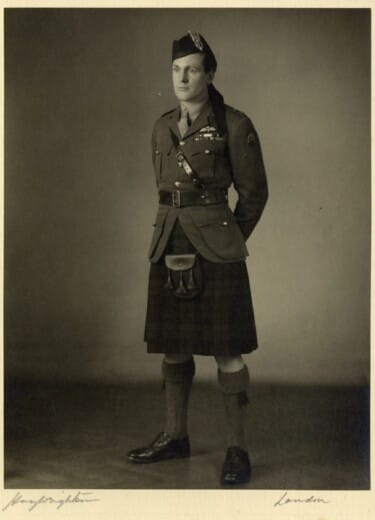
Later, Freddie was posted to a Special Training Centre on the west coast of Scotland. Alongside Bill Stirling (brother of SAS founder, David Stirling), Freddie shot; hunted; blew-up trees for practice and tabbed across rugged landscapes. Freddie taught these skills to others and excelled too in navigation, fieldcraft and survival. One of his colleagues commented that, ‘one minute he would be talking about snow buntings in the Arctic, the next how to strangle your adversary in unarmed combat.’
In 1940, Freddie was posted to Australia, under Churchill’s Special Operations Executive, to learn how to wage irregular warfare.
Freddie was later instructed to go to Kuala Lumpur to organise and lead reconnaissance parties behind enemy lines. Little did Freddie know that from this point on he was going to remain isolated in the depths of the harsh Malayan jungle, evade capture and experience deadly encounters with the enemy and horrifying diseases for a further three and a half years. Finally, in 1945, a glimmer of hope and, ultimately, victory came in the form of a radio transmitter and Freddie was able to organise a rendezvous with a submarine. Freddie had survived. Not only had he survived but he had played a vital part in changing the course of the war.
Christopher and Stephen are incredibly talented and extremely humble individuals in their own right, and both won our hearts on this special evening. Through their eloquently narrated accounts, they ensured that the spirit of Freddie Spencer-Chapman, a talented author, schoolmaster, explorer, war hero and so much more, will continue to inspire and capture the imagination of generations of Sedberghian.
In Freddie’s words, ‘if you can win the hearts of your pupils by good example, the greatest achievement becomes possible’.