


History of Sedbergh School in 50 Objects: #2 St Andrew’s Church, 1525


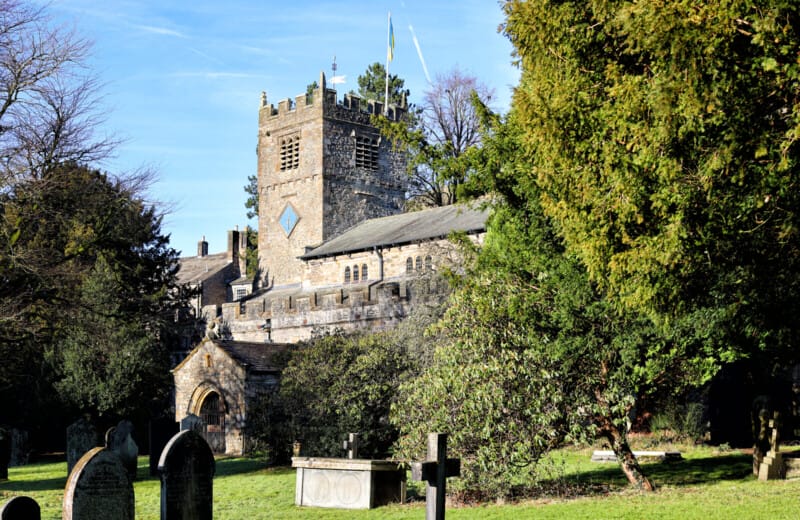
St Andrew’s Church is by far the oldest building associated with Sedbergh School. The main body of St Andrew’s Church dates from around 1500 but incorporates elements from as early as 1130A.D, such as the round-headed inner doorway, believed to date from Norman times. The building lacks symmetry throughout which reflects the incremental development of the structure. A tower at the west end of the church includes a striking embattled parapet with pinnacles at the corners. The tower flagpole currently flies a Ukrainian flag.
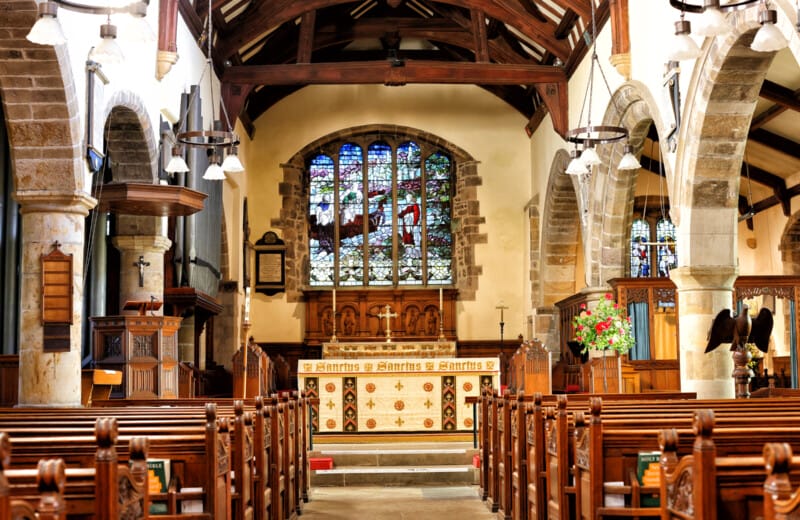
A document relating to St Andrew’s Parish Church provides the earliest written evidence that Lupton’s school existed. A Deed dated 24th March 1525 recorded an agreement regarding a newly built Lady Chapel at St Andrew’s. The chapel, now the chancel of the church, had been commissioned and funded by James Cowper, described as ‘an honourable man’. The deed of agreement between eight church wardens and twenty-four principle parishioners recorded various rights relating to access and use of the chancel. James Cowper, his wife and their heirs were granted two free seats. The only other claim granted to seats can be found later when the deed states that ‘a place shall always be kept free for the Chaplain and scholars celebrating the Lady Mass and anthem in the said chapel’. This indicates that Lupton’s school was in existence by March 1525 and that the boys already played an active and familiar part in church services. Cowper was the richest man in Sedbergh. Lupton made the prudent decision to enlist him as one of the first Trustees of his School’s lands.
Sedbergh School continued to use St Andrew’s Parish Church for worship until May 1883 when pupil numbers at the school were so great that it was no longer possible to accommodate all pupils comfortably in the church. In petitioning the governors to create a dedicated space for worship in the school, Headmaster Hart explained that:
“No words of mine could well exaggerate the importance through life of boys being brought up to love and attend to their Sunday Services, and such a result is obtainable only in a School Chapel. For myself I should prize most highly the opportunities which would thus be given to me and to other lay masters of addressing the boys on the most vital questions.”
Hart’s request was granted and the Lower Room of ‘Old School’, the current School Library, was converted to be a chapel until a purpose-built chapel was constructed in 1890.
St Andrew’s continues to have a vibrant congregation and plays host to community groups, musical performances and weekly worship under the guidance of Reverend Andy Burgess.